
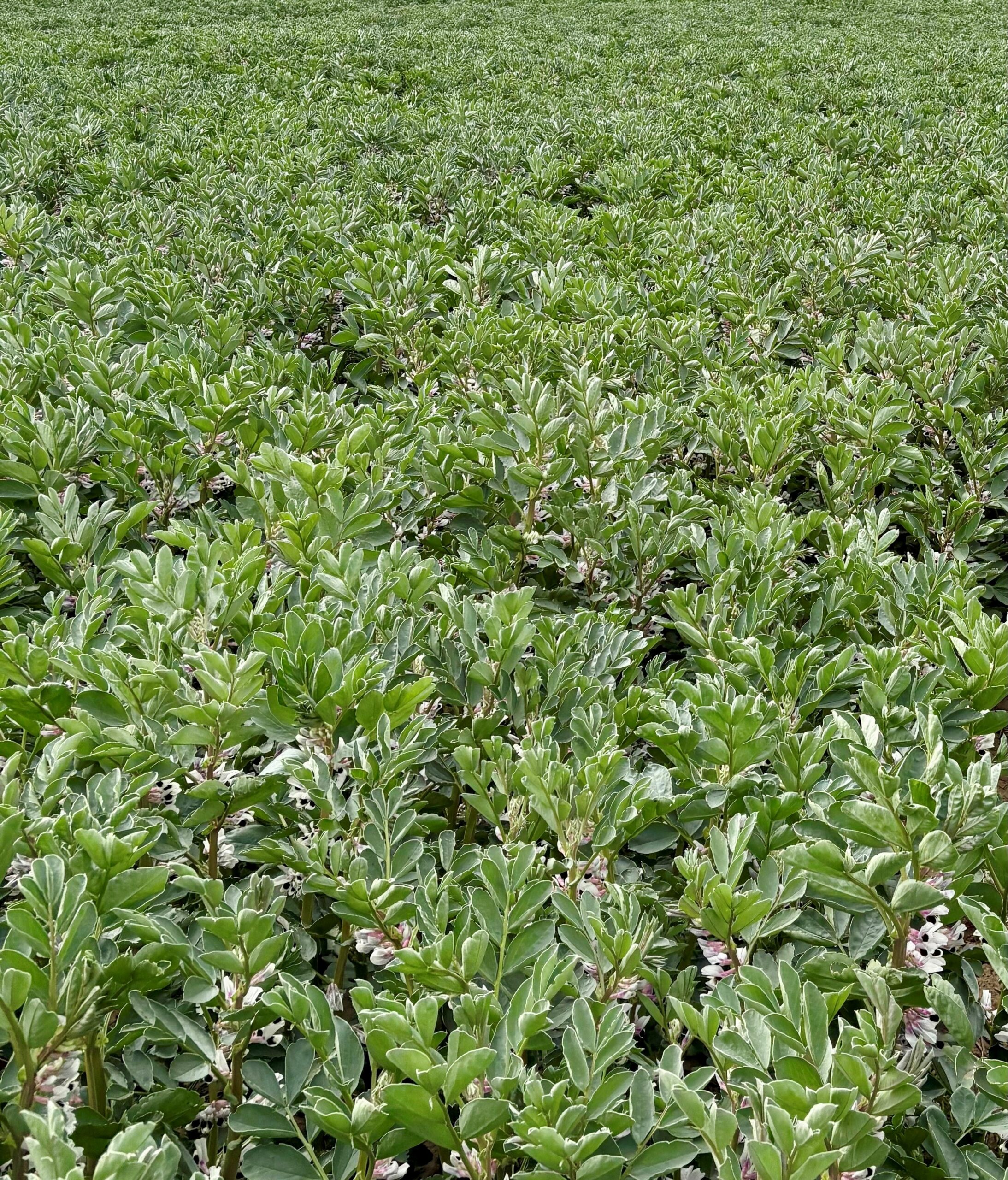
Beans in Scotland have a reputation for being late to harvest, poor yielding and economically quite average but this may not be an entirely fair picture.
With many growers looking for alternative break crops to extend rotations, nitrogen-fixing beans could be the answer this season.
Through careful variety choice, establishment methods and inputs, Scottish growers are now seeing increased yields and consistency. Combined with changes to the Greening Guidance which allow greater herbicide and pesticide use, growing beans is becoming increasingly attractive for arable famers in Scotland.
At Scottish Agronomy, in collaboration with PGRO and Innovative Farmers, we have been running on-farm split-field trials from East Lothian to Easter Ross to generate Scottish-specific variety information – including winter hardiness, plant counts, flowering and maturity dates, and yield analysis – so growers can decide if beans are right for their farm, and, if so, what varieties to grow.
The project builds on three years of work already underway with a few Scottish Agronomy growers, and is showing interesting results. It compares four varieties: Tundra, Vespa and Vincent, which are all winter varieties, and Lynx which is a spring variety but grown as a winter variety.
All four varieties were established in the same way on the same sowing date on each individual farm, sometime between mid-October and early November. One grower broadcast and ploughed down, while the other four used a drill, with establishment taking place.
Two of the sites suffered losses to winter-kill and bird damage, but the remaining three trial sites came through strongly this season, benefitting from one of the best bean-growing summers in recent memory. When the crops are cut and analysed as part of the Bean Yield Enhancement Network (YEN), we’ll gain valuable insights into the crop performance that will boost farmer confidence in growing beans.
On a purely economic level, beans will remain a challenge – the variable yields and modest prices don’t always stack up – but the real benefit is as a break crop, particularly when it comes to controlling grass weeds. Add to this the legacy effect of a nitrogen-fixing crop which can reduce synthetic fertiliser applications to the following crop by 20 kg/ha compared to following a cereal crop, and the numbers start to add up.
The recent changes in Greening Guidance will also make growing beans more appealing. Where exemptions have been removed, some businesses will be looking for new ways to add EFA into their farmed area; and one notable change to the EFA – Nitrogen-Fixing Crops option allows herbicides to be applied to control grass weeds, and fungicides to control chocolate spot, neither of which were previously permitted.
For growers with a black grass or brome issue, the use of propyzamide (Kerb) as a herbicide in winter beans offers effective chemical control over a longer germination window than other herbicide options.
One final advantage worth mentioning is the growing potential for beans as livestock feed. Beans provide a homegrown protein source that reduces the reliance on imported soya, an increasing requirement and, whilst well established as a potential feed source for ruminants, work in recent years has shown beans to also have good potential as a feed for pigs and chickens building a wider market for growers to sell their beans.
While beans won’t be the right fit for every business, with this improved understanding of variety performance under Scottish conditions through on-farm trials, plus the flexibility offered by the new Greening Guidance, growers now have more tools to manage some of the historic challenges around beans and to maximise the rotational and environmental benefits that go beyond the farmgate price.
